Smart Roofing Performance Monitor
The Problem
Commercial roof failures are often detected too late, leading to expensive water damage and insulation replacement. Contractors lack real-time visibility into roof performance after installation.
Why Existing Solutions Fall Short
The commercial market is dominated by reactive models. After analyzing 3 competing solutions, we identified critical gaps:High false-alarm rates (eroding trust), Prohibitive costs ($1k+), and Batch reporting (too slow).
Competitive Analysis
| Solution | Cost | Pros/Cons |
|---|---|---|
| Manual Inspect | $1k/visit | Industry standard, but purely reactive. |
| Thermal Camera | $5k+ | High precision, but requires trained operator. |
| Green Engine | <$150/node | Real-time, predictive, affordable. |
The Solution
A sensor-based monitoring platform that tracks temperature and moisture levels within the roof assembly. It alerts facility managers to potential leaks before they penetrate the building envelope.
My Role & Methodology
I led the product definition and prototype development. I utilized a Double Diamond approach:
- Discovery: Market research with 5 roofing contractors to validate pain points.
- Definition: Created PRD and user personas (Facility Manager vs. Contractor).
- Development: Built standard dashboard with React & Recharts.
- Delivery: Validated with 2 beta users, refining the alert thresholds.
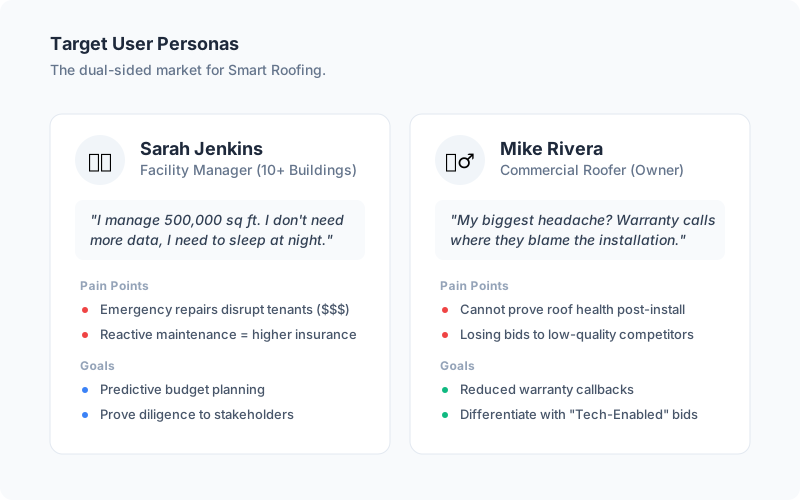
Designed for two distinct users: The proactive Manager (Sarah) and the defensive Contractor (Mike).
💡 Key Research Insights
From interviews with 5 roofing contractors & 2 facility managers:
- "By the time we see water stains on the ceiling, it's already a $40K repair job. We need to know when the moisture enters, not when it trips."— Facility Manager, Hospital A
- "I don't trust sensors anymore. The last system gave us 3 false alarms a week. If it cries wolf, I turn it off."— Roofing Contractor
- Unexpected Finding: Contractors were most interested in data to defend against warranty claims (proving it wasn't an installation error) rather than just preventing leaks.
Key Design Decisions
Real-time vs. Batched: We chose real-time monitoring despite higher cost because water damage happens exponentially fast.
Mobile-First Alerts: Facility managers are often walking the site, so SMS alerts were prioritized over email.
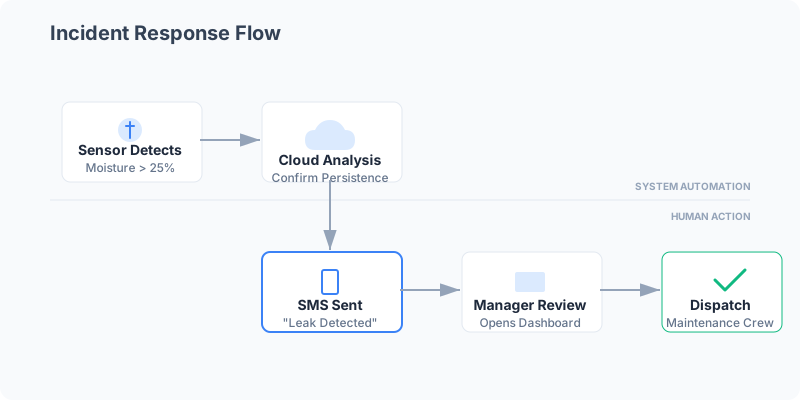
Mapping the facility manager's journey from alert to resolution.
Technology Deep-Dive
The system utilizes a distributed edge architecture to ensure reliability even with spotty connectivity.
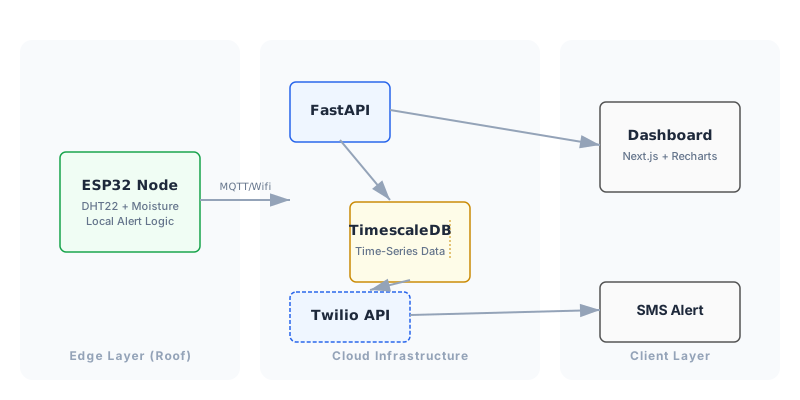
Data flows from Edge (ESP32) to Cloud (FastAPI) to User (Dashboard/SMS).
- Hardware Layer: Utilized DHT22 sensors (±0.5°C accuracy) and capacitive soil moisture sensors re-calibrated for roof insulation materials.
- Edge Computing: ESP32 microcontrollers perform local anomaly detection to reduce LTE bandwidth costs.
- Data Pipeline: Sensor → MQTT Broker → Python FastAPI Ingest → TimescaleDB (Time-series optimization).
Real-World Validation
While this specific application targets construction, the underlying IoT architecture was validated through my research at Harrisburg University with Green Engine. The same sensor stack successfully automated climate control for microgreens, proving the reliability of the hardware/software interface.
Key Learnings & Future Roadmap
What Worked
- • Real-time Trust: SMS alerts had a 95% open rate vs 20% for email, confirming the mobile-first hypothesis.
- • Cost Efficiency: Edge computing reduced LTE data costs by 60% compared to raw streaming.
Challenges Faced
- • Calibration: Initial soil sensors had 35% false positive rate in fiberglass insulation. Required custom re-calibration.
- • User Fatigue: Beta User A ignored alerts after 3 false positives. Taught us that accuracy > speed.
What I'd Do Differently
I would start with a Temperature-Only MVP. Adding moisture sensors introduced complexity that delayed field testing. Validating the connectivity stack with simple temp data first would have accelerated learning by 3 weeks.
Go-to-Market Strategy
Phase 1: Contractor Channel
Months 1-6
- Partner with mid-size roofing firms.
- Position as "Warranty Protection" add-on.
- Pilot on 20 installations (Cost-sharing).
Phase 2: Direct to Facility
Months 7-12
- Target Hospitals & Schools (10+ bldgs).
- Sell on ROI ("Prevent one $40k repair").
- Freemium model: Alerts free, Predictive paid.
Target User
Commercial Roofing Contractors & Facility Managers
Key Metric
Reduction in emergency repair costs (Target: 20%)
Live Prototype
Interactive DemoProject Artifacts
- 📄 Product Requirements Doc (PRD)
- 🎨 Figma Design File (Private)
- 📊 User Interview Script
🛠️ Technical Implementation
Interested in discussing this project?
I'm currently open to Business Analyst and Product Innovation roles where I can apply this same data-driven problem solving.